!['I Swear' movie poster [Sony Pictures Classics]](https://dallasfilmnow.com/wp-content/uploads/2026/04/dfn_i-swear_720.jpg?w=486)
Robert Aramayo, Maxine Peake, Shirley Henderson, and Peter Mullan star in the biopic.
Undeniably affecting, the film endeavors to place the viewer into the mind and body of John Davidson, afflicted with Tourette’s Syndrome as a young teenager during a time when it was unknown to the general public.
Framed with the 2019 ceremony in which Davidson was awarded an MBE from the Queen of England, the film rewinds to 1983 Scotland for a most uncomfortable time as the adolescent Davidson (Scott Ellis Watson) begins exhibiting the motor and vocal tics that are symptomatic of the affiction. The tics soon escalate to include coprolalia, the involuntary (and uncontrollable) expression of obscene words and slurs.
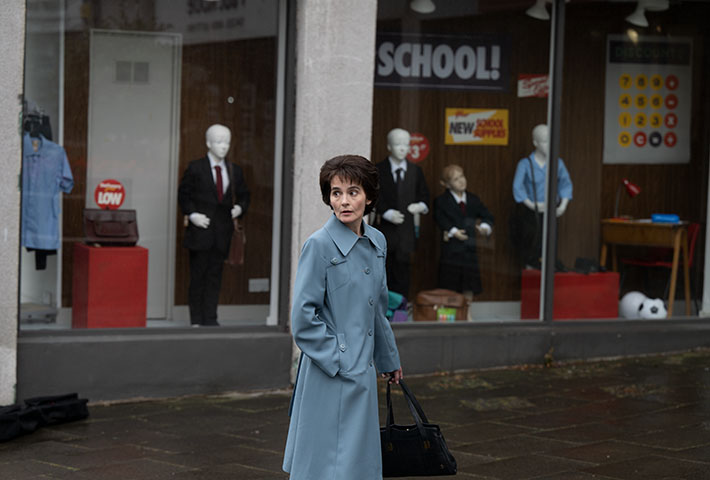
His parents (Shirley Henderson and Steven Cree) are initially puzzled, then angered by their son’s behavior, mistaking his involuntary outbursts for adolescent rebellion, and his schoolmates are likewise unsympathetic to his condition. John is treated like rubbish by everyone for months until, finally, someone recognizes what he is dealing with.
The film then skips ahead to 1996, bypassing the period around the BBC television documentary John’s Not Dead (1989), which brought national attention to his neurological disorder and some improvement in how his local community treated him. Not everyone was fully informed, however, as a brutal reaction to an unintentional slur leaves him beaten badly by ignorant thugs.
Things change for the better when Dottie Achenbach (Maxine Peake), the mother of a childhood chum, invites him into her family’s home; she’s suffering from a fatal cancer diagnosis, and figures John can help relieve her family, as well as John’s mother, who has softened over the years but it clearly exhausted. John gets a further boost when Tommy Trotter (Peter Mullan) hires him to work at the community centre, becoming a paternal mentor to John, whose father left the family years before.
Writer/director Kirk Jones draws from the three BBC documentaries made about John, including some footage of John’s Not Dead in the concluding credits, as well as Tourette’s: I Swear I Can’t Help It (2009), which updated the previous docs. The film includes finely-crafted performances that are respectful and understanding of Tourette’s syndrome and the severe challenges that John Davidson has faced for more than 40 years.

Solely as a film, it feels very much like a companion to Kirk Jones’ two earlier writing/directing efforts, Waking Ned Devine (1998) and Everybody’s Fine (2009), rather than his more recent director-only credits on What to Expect When You’re Expecting (2012) or My Big Fat Greek Wedding 2 (2016). In his earlier films, Jones featured characters who were not seeking attention or popularity or anything like fame; instead, they sought peaceful resolutions and heartwarming reconciliations.
Likewise, I Swear is not looking for any kind of retribution against those who dealt harshly with John Davidson in the past. Instead, it seeks to increase understanding and empathy, in effect saying ‘get some knowledge’ before striking out or criticizing from ignorance.
The film opens Friday, April 24, in select area theaters, via Sony Pictures Classics. For more information about the film, visit the official site.