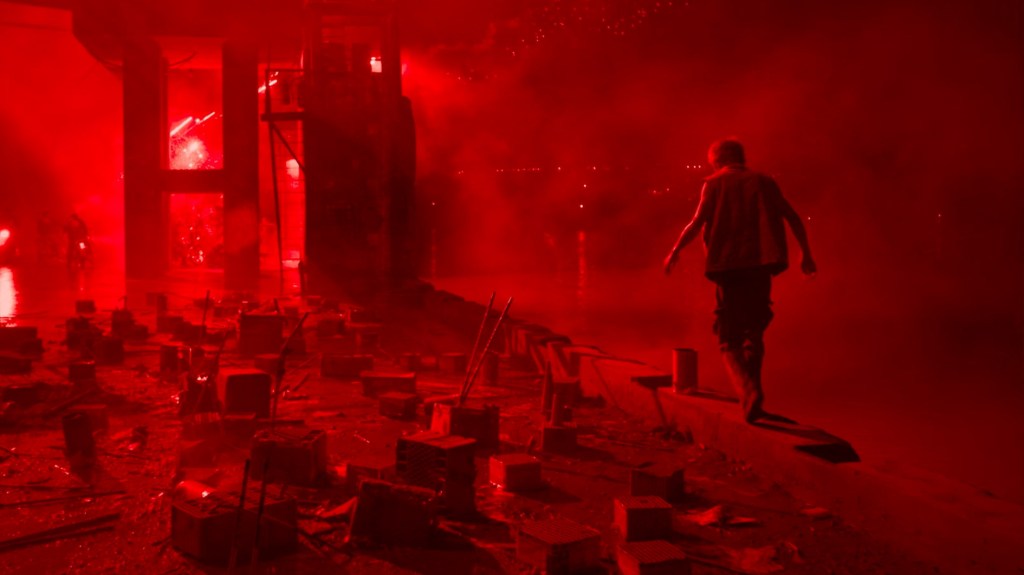
16. Cover Up (Laura Poitras and Mark Obenhaus)
At one point in “Cover” Up, legendary journalist Seymour Hersh tells directors Poitras and Obenhaus he doesn’t want to proceed with the filmmaking process. Based on the information gathered and dark stories he shone a light on throughout his career, no one can blame him. From the massacre at My Lai to his ongoing research in Israel and Palestine, Hersh is a writer who’d be infamous for even one of these breakthrough investigative ventures. He’s had many. “Cover Up” features the type of fearless journalism I’m afraid is lost, muzzled, and drowned out in today’s culture.
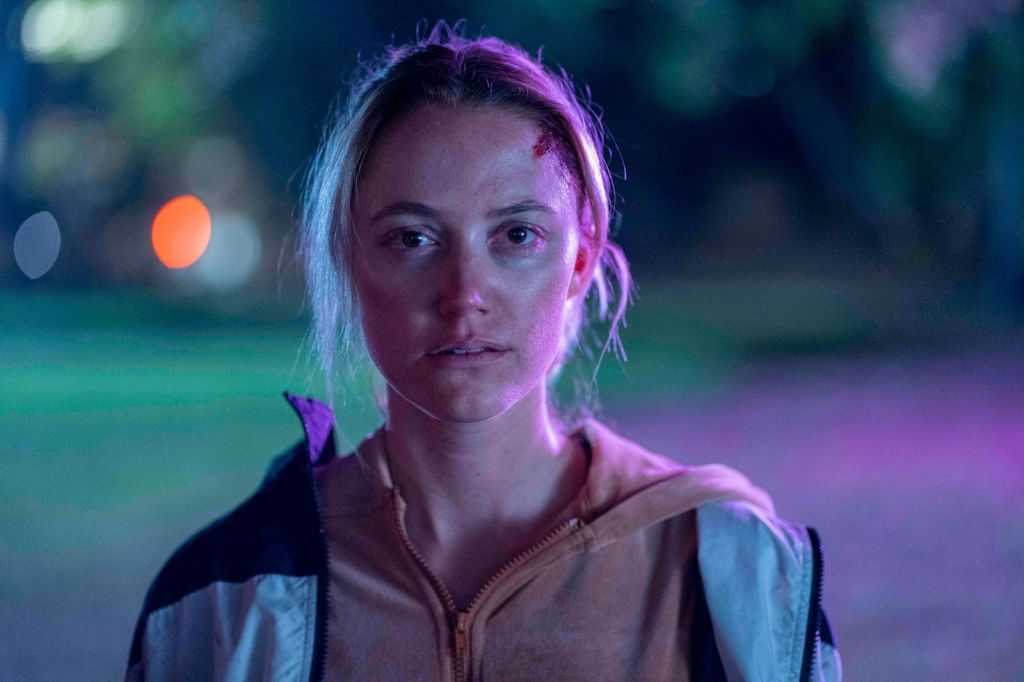
15. Night Always Comes (Benjamin Caron)
It’s telling that Benjamin Caron’s “Night Always Comes” is co-produced by Mary Bronstein as it’s a film that fits tangentially into the anxiety-filled/Dante’s journey-like universe of the Safdies and Bronstein’s own partner, Ronald. As Lynette, Vanessa Kirby gives one of her typically great and bracing performances as a desperate woman falling further into the nocturnal abyss trying to raise 25K in 12 hours. Not substituting cheap drama or narrative fumbles, “Night Always Comes” boils slowly and deliberately. And the scene where she ends up in a warehouse run by hollow-eyed drug addicts is more terrifying than any horror film I watched in October.
14. The Librarians (Kim Snyder)
Kim Snyder’s documentary about the ongoing battle on book bans and public library freedom most likely won’t alter the outlook of those pushing to exorcise knowledge and exploration from the youth, but for those of us that hold knowledge, inquisitive thoughts, and the basic right of every person to know about their history, race, or identity, “The Librarians” is essential viewing and one of the many vanguard explorations of our current social and political erosion.
13. Train Dreams (Clint Bentley)
I resisted “Train Dreams” for some of its running time before ultimately giving into its frontier fatalism and recognizing the beauty of the small moments of humanity that overshadow the larger themes of remorse and hard-scrabbled existence. Finding a litter of dogs making a nest in a tent. The tying of a man’s shoe. The rub on the shoulder of a Native American neighbor. Although Joel Edgerton’s Robert Grainier is a syphon for all the growing pains and ebullience of the growth of the Pacific Northwest for a sixty-year period, “Train Dreams” manages to comment beautifully on both the cosmic aura of manifest destiny and the missed opportunities of a simple man. By the end, I was extremely moved for both.
12. Parthenope (Paolo Sorrentino)
Sorrentino’s latest film, “Parthenope”, features so many of his affectations that mar some of his previous work. It’s messy at times. Its emotions are scattershot. And it’s framed and stylized like an aue du cologne commercial. All of these things are exactly why I love it so. It’s messy and busting at the seams with snippets of life. Its emotions are tonally divergent (sometimes within the same scene), but when they hit, they burrow deep under the skin. And it looks gorgeous as Sorrentino’s camera analyzes the beauty of skin, movement, and curtains wavering in the ocean winds. Like his aged protagonist in “The Great Beauty”, Parthenope (Celeste Dalla Porta) is also searching for the very meaning of her existence…. and the two could be inverse wanderers. Starting with her birth (in the ocean as her name surmises), “Parthenope” follows the young woman from first love to retirement age as she navigates her way through all the baggage/trauma/forlorn happiness that comes with it. In typical Sorrentino fashion, there are some odd choices along the way…. some breathtakingly poignant breaks from reality into fantasy…. a soundtrack that complements the visual strategy…. and I’m certain there’s a few history lessons buried within about the contentious relationship of Naples with the rest of Italy. But the overwhelming glory of “Parthenope” is how he melds all this together to create a film both introspective about how beauty is always shifting and how he maximizes the form to play like a shimmering music video. No one does it like Sorrentino.
11. She Rides Shotgun (Nick Rowland)
An ordinary tale made unique by two magnetic central performances (newcomer Ana Sophia Heger and Taron Egerton) and several set pieces throttled to perfection. Rural anarchy, tenuous familial bonds, and tense pacing all settle together in “She Rides Shotgun” to make it one of best genre pieces of the year.
10. The History of Sound (Oliver Hermanus)
If Oliver Hermanus’ “The History of Sound” would’ve just followed the decade long ebb and flow relationship of Lionel (Paul Mescal) and David (Josh ‘O Conner), it would be a sensitive and emotionally walloping examination of closeted love. If the film would have just been about the forays into the reaches of Northeastern America in search of recording the ghostly voices of folk song, the film would’ve been intensely interesting. And since the film weaves both of these tangents together, it ends up being a tremendous merger of so many emotions and ideas.
9. Relay (David Mackenzie)
In “Relay”, the new film by David Mackenzie, sexual tension is sublimated by phone conversations and foreplay is watching from high perched, shadowy places in a bustling New York City. But it’s really not that sexy…. unless one calls the whiff of 70’s retro sensual….. something the film has in spades, right down to the vinyl collection of the film’s main character played by Riz Ahmed. I loved everything about this film. Taut direction by Mackenzie and a sure handed script by Justin Piasecki follows Ahmed as a fixer of sorts, trying to help the beautiful but afraid Lily James return sensitive documents purged from her previous employer. Full of wonderfully choreographed set pieces where bodies are in motion one after the other and some sly misdirection at the hands of the bureaucratic post office (for once) all establish “Relay” as an action film in the most subversive and best way possible. And the third act, like it or not, actually stays true to the film’s tribute to classic paranoid thrillers whose unspoken themes of broken trust and fractured morality convey more about the state of our modern world than anything else.
8. Eastern Western (Biliana and Marina Grozdanova)
My favorite film at this year’s Dallas International Film Festival was a late-night screening of this unhurried western with three acts and an epilogue. Biliana and Marina Grozdanova’s Eastern Western is a flat-out masterpiece. Too often (and wearily so), the western concerns itself with frontier justice and law and order melee. The Grozdanova’s film is refreshing for the way it juggles expectation and becomes a gentle treatise on the fraternity that grows out of the immigrant experience in nineteenth century America. With the exception of one marvelously executed shootout, the film chooses to focus on campfire conversations, everyday life, and the hard necessity of friendship in an unknown territory. One of the great films about the immigrant experience in frontier America that ranks alongside the films of Jan Troell, both in tranquil spirit and expansive vision.
7. Eephus (Carson Lund)
One of the most unglamorous adult baseball films one will ever see…. an effort where one can hear the knee joints popping with every run to first base….. where home plate umpires leave after 6 innings because it’s getting late and want to go home….. and most foul balls hit into the woods need to be tracked down and reused because it’s the last one. But this shaggy dog aesthetic is also what makes Carson Lund’s Eephus a pure joy. It’s a film that features a magnificent ensemble cast with a script that’s sharpest from off-camera lines of dialogue and goofy glances between people, but it also strikes at the metaphorical heart of what makes baseball so magically great- which is something most big budget films of the same material hint at but never quite get right. And the ideal that a game can stretch from morning until night on a grass and dirt field scheduled to become an anonymous concrete fixture very soon, Eephus also materializes a grand statement about the game’s immortality and those who love it wanting to experience its gentle nature forever.
6. It Was Just an Accident (Jafar Panahi)
For anyone who claims that good things come from simply pointing a camera at their actors and letting them fly, see Jafar Panahi’s “It Was Just an Accident” for a masterclass. There are 3-4 scenes here that roll on for several minutes (13 minutes in one) and feature convoluted emotions and dialogue that are extraordinary. Everything else about the film- from its knotty exploration of revenge to the incisive moments of humor and humanity- is aces as well. This is a film that begins portentously as a family hit a dog on a darkened road and whose father is soon thrust into an episode beyond anyone’s imagination. The way Panahi constantly shifts point of view, identification, and clarification creates a thriller-like environment where every incremental decision tightens the grasp.
5. Nouvelle Vague (Richard Linklater)
It makes sense that Richard Linklater would be the one to make a loving ode to the French New Wave and its varied participants carving out a new frontier of cinematic language. From his debut feature “Slacker” (1990) that mimics some of the same chaotic wanderings of young weirdos as “Breathless”, to the playful and ambitious use of cinematic time with “Boyhood” (2014), Linklater has been the American bloomer of what the French were putting down decades ago. All that aside, “Nouvelle Vague” is wonderful for its spot-on personifications of so many of the players (Zoey Deutch and Guillame Marbeck especially) and the simple joy in which Linklater infuses in the chore of filmmaking done by the legendarily cocky Jean Luc Godard. The only problem is that the film makes it look so easy to just go out and make a movie…. something the film landscape has been imitating (and colossally failing at) since the French New Wave began making movies 50 years ago.
4. Weapons (Zach Cregger)
Zack Cregger’s unexpectedly sprawling and affecting horror/mystery “Weapons” came out at the perfect time this summer with a dearth of interesting titles up to that point. Taking as its basic subtext the disappearance of 17 young kids from one teacher’s classroom and expanding outward into a compelling treatise on this act’s impact on its community (please just some good old fashioned hoodoo mumbo jumbo as well), Cregger plays with structure, tone, and perspective to entice all sorts of emotions. Beginning with the embattled teacher, Julia Garner, “Weapons” soon spirals out to incorporate a variety of people caught up in the mystery (Josh Brolin, Benedict Wong, Alden Ehrenreich), shifting around to deepen and compound just exactly what happened. Armed with a keen visual style that utilizes long shots, whip pans, dolly shots, and light and dark, Cregger weaves a narrative that’s propulsive and exciting. It may not be the jump scare masterpiece that many want, but for my money, “Weapons” strikes the absolute perfect balance of current (oft overused) trauma horror and auteurist control that makes him a true talent to watch.
3. Resurrection (Bi Gan)
Bi Gan’s “Resurrection” is a dizzying ode to cinema itself. Comprised of several short stories that would be quite wonderful on their own, each episode’s clipped nature allows Gan to play with the skeletal atmosphere of genre- from silent film expressionism to post moder vampire tale- and burn out the edges of something completely new in the process. I won’t say I completely understand the binding prologue and finale (in which a creature is captured by beautiful Shu Qi in order to be placed inside each segment’s dreamy nature), but “Resurrection” is working on the senses higher than linear storytelling. In essence, we’re all travelers (like the creature’s various entrance into each story) whose insatiable need for ideas, faces, and emotions are most eloquently provided by the movies of our lifetime. And M83’s soundtrack is the best in years, heightening simple moments and drowning out the yearning in others. Just a stunning achievement all around.
2. The Secret Agent (Kleber Mendonca Filho)
Filho’s “The Secret Agent” is a film I can’t stop thinking about. The sense of texture, character, and shaggy-dog nature of its central subterfuge is breathtaking. Clocking in at over two and a half hours, there doesn’t feel like a wasted moment- even when the film introduces Udo Kier’s exasperated German shop keeper… an opening whose ominous placement of a dead body will linger over the remainder of the film…. and secondary characters are given shining moments of humanity. For all its meandering, the focus of a larger world in a specific time and place (1970’s Recife, Brazil) are calculated. And when a thriller-like plot does kick in (something this film and “One Battle After Another” share in the way ominous outside forces use power to retaliate) Filho and star Wagner Moura make all the pieces fall together brilliantly, right down to its anticlimactic (but suitably nihilistic) avenue of displaced family and violent retribution.
And my favorite film of the year- One Battle After Another (Paul Thomas Anderson)
After three viewings in the theater, I was still hesitant to write about Paul Thomas Anderson’s “One Battle After Another”, unable to really add anything to the praising rhetoric. From Jonny Greenwood’s ownership of sound…. it’s pulverizing editing style…. and the way Anderson melds so many of his prevalent ideas into a sort of action-comedy…. the film is a triumphant encapsulation of current anger and bumbling comedy. Everyone involved gives amazing performances (Benecio del Toro especially as his cool demeanor is the perfect opposite of DiCaprio’s frazzled live wire embodiment) and the film flows with precise momentum. Finally, it’s probably Anderson’s most angry dissection of despondent fathers, fractured families, and people with lots of love to give but faltering in where to put it (as once quoted by William H. Macy) in another Anderson masterpiece over 25 years ago.
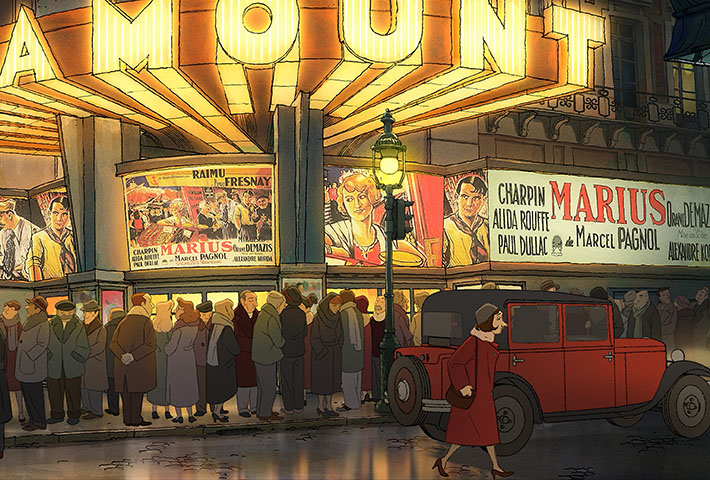
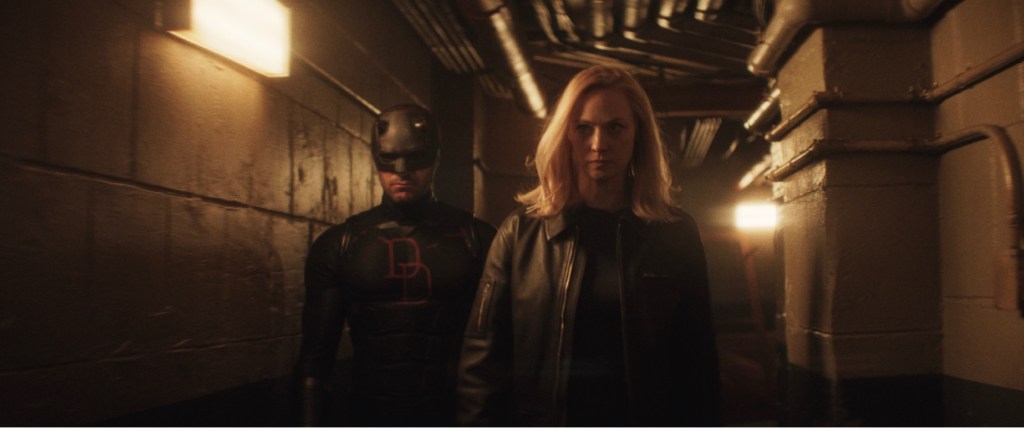
Honorable mentions: Marty Supreme, Keeper, Sentimental Value, The Ice Tower, Cloud, Hurry Up Tomorrow, Sinners, Remaining Native, Black Bag, and Becoming Led Zeppelin
 Dallas Film Now.
One response to “My Favorite Films of 2025”
‘Warfare’ , the movie, was the 1st movie of 2025 to hit me as a best for its honest depiction of living through the overwhelming emotions of a death defying isolated battle inside a house. At the time of its release all the reviewers were raving. And to later learn that the entire production was filmed from inside an unmanned air force base outside of London. OMG those jet flyovers at the end to clear for escape and then total destruction of all those buildings. How could all the movie reviewers forget this statement on the War in Iraq ???