Review: ‘Wreck-It Ralph’ Wins With Cool Graphics, Warm Hearts

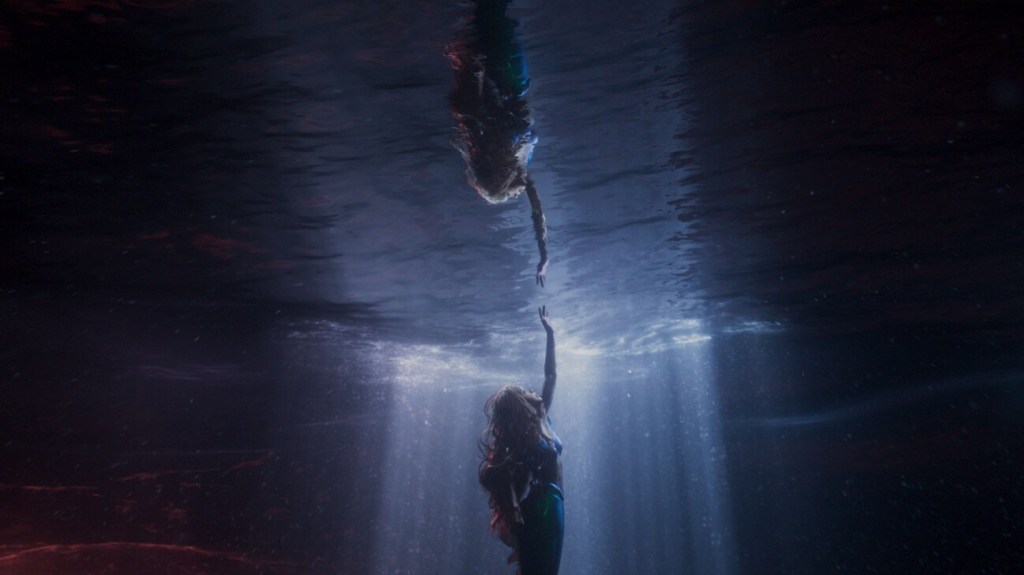
'Wreck-It Ralph' (Disney)

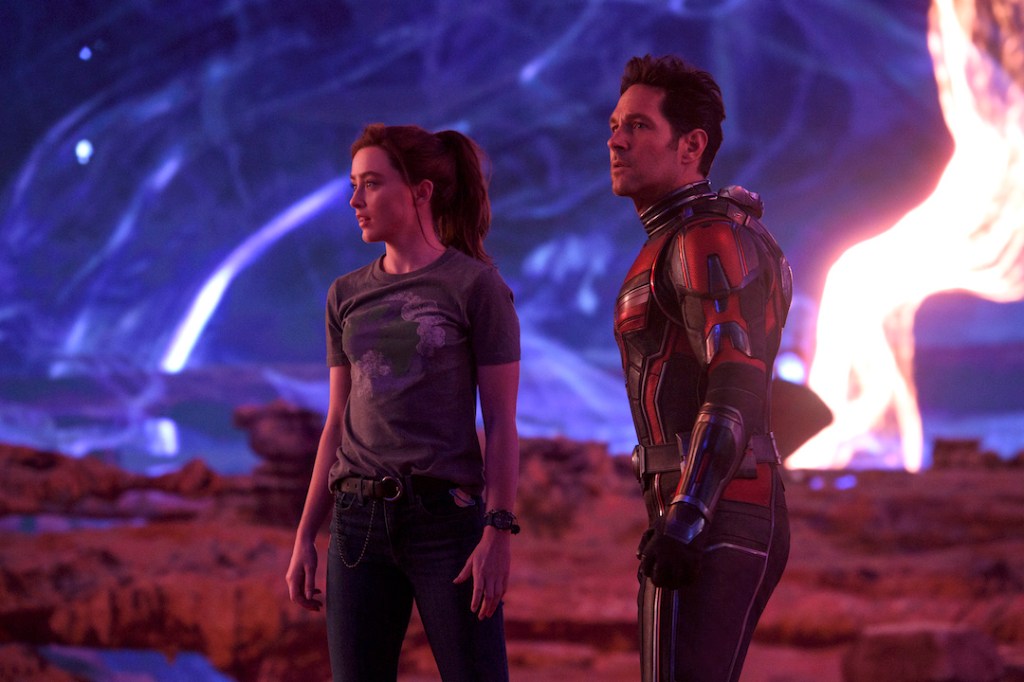
'Wreck-It Ralph' (Disney)

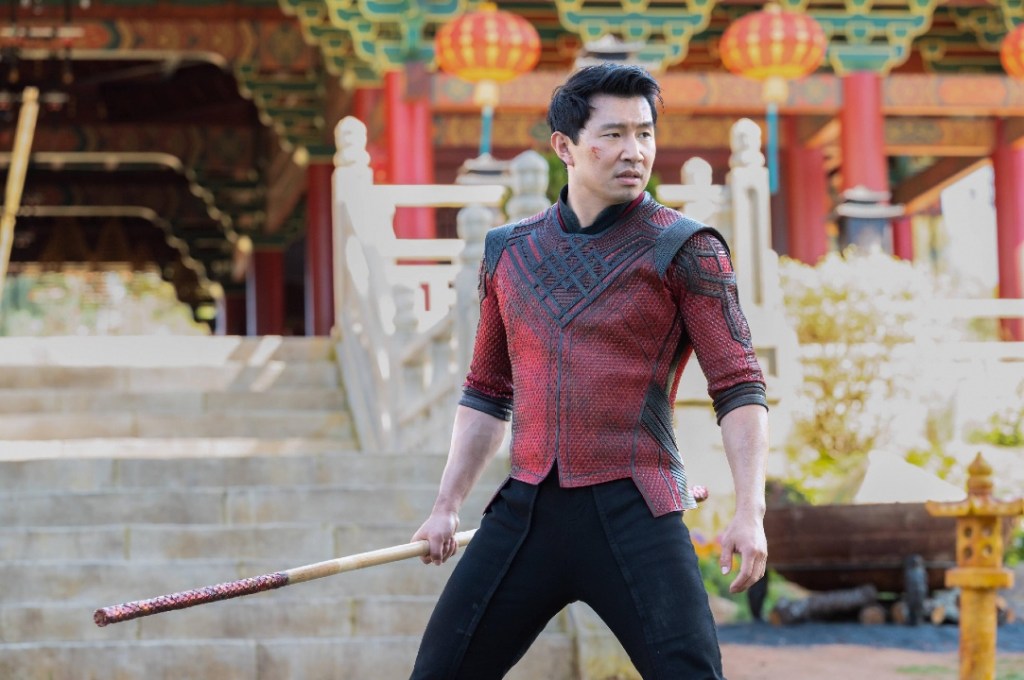
‘Wreck-It Ralph’ (Disney)

Super happy fun-time joy joy! At first blush, Wreck-It Ralph swims in a pool of video game goodness, threatening to drown anyone who doesn’t share its nostalgia for the golden era of the early 80s, a time in which arcades, quarters, and pixels ruled the minds and wallets of young people. Yet even if you’ve never been tempted to pick up a game controller, the movie turns out to be built around a very sweet father-daughter relationship that reaches far beyond the constraints of its environment.

Setting aside my own personal connection to the video gaming setting that is celebrated uncritically, it’s the characters who emerge with winning personalities, despite their two-dimensional nature. Wreck-It Ralph (voiced by basso profundo John C. Reilly) is the villain in an arcade game called Fix-It Felix, (the reedy-voiced Jack McBrayer) a Donkey Kong knock-off whose 8-bit graphics fit perfectly with that period. The movie imagines that all the characters in video games are “real,” living lives that are restricted to a degree by their pixellated nature, yet still able to leave their particular environment and visit other games and characters via electrical wiring and gathering in their version of Grand Central Station.

Well, Ralph is tired of being the bad guy, spurned by all the other characters in his game, who party like it’s 1999 and make clear that they don’t want to be friends with Ralph, who has giant hands and an oafish nature. He attends a support group for video game villains, but it’s not helping him deal with his continuing sadness. One night, a misunderstood remark leads him to believe that he he can only win a medal, the other characters will be nice to him and he won’t be so lonely.

So Ralph goes renegade, sneaking into another game, an ultra-modern military fighting game, where he encounters Calhoun (Jane Lynch), and is pursued by Felix, who wants him to come back to the game. (Without Ralph, the other characters suddenly realize, the game is considered defective, and they run the risk of being unplugged and hauled away to oblivion.) Eventually they all end up in Sugar Rush, a candy-themed racing game, where Ralph becomes friends with young Vanellope (the scratchy-voiced Sarah Silverman), who has been ostracized much like Ralph, and tries to stay positive, even though she is lonely too. Meanwhile, she harbors a not-so-secret desire to qualify for The Big Race.

All of this set-up may sound a bit laborious, but the movie slides effortlessly from one story point to the next, driven by the sad-sack antics of Ralph and the chirpy enthusiasm of Vanellope, and enlivened by the performances of actors well-chosen for their vocal talents. Alan Tudyk practically steals the show as King Candy, who rules Sugar Rush with an iron fist big candy cane.

Director Rich Moore got his feet wet with 17 episodes of The Simpsons back in its golden era of the early 90s, before moving onto other shows, most notably Futurama, so he’s well-versed in making every frame count, stuffing the film with visual jokes as well as more video game character namechecks and product placement than would fit in a normal-sized grocery store. The witty dialogue and story supplied by writers Jennifer Lee and Phil Johnston (Cedar Rapids, in which Reilly played a starring role) — with additional story material credited to Reilly — keeps the jokes flying, though time is also carved out to develop a most atypical, and unexpectedly touching, father-daughter relationship between Ralph and Vanellope.

Granted, Wreck-It Ralph hits many of my personal sweet spots, over and over again, and frequently threatened to overwhelm my system with pleasure, so it’s difficult for me to be entirely objective, but I think the movie is a rare treat, one that works its magic on both children and adults.

Wreck-It Ralph opens wide across the Metroplex on Friday, November 2.

About these ads

Review: ‘Brave’ Introduces the Pixar Princess

'Brave' (Disney-Pixar)

‘Brave’ (Disney-Pixar)

Pixar Animation Studios has created a consistently impressive body of work since Toy Story was unleashed upon the world in 1995.

That debut was immediately noteworthy because of its advanced computer graphics, but as the company hit its stride with Finding Nemo (2003) and The Incredibles (2004), it became apparent that Pixar was even more concerned with honing their stories and characters to the highest quality possible, to a point well beyond the dismissive “good for a kiddie flick” or “not bad for a cartoon.”

Cars was considered a dip, falling below their standard of quality, but upon reflection (and repeat viewing) it’s more comparable to A Bug’s Life or Monsters, Inc., enjoyable comedies, though lacking in emotional and thematic heft.

Pixar upped its game with its next four releases (Ratatouille, WALL-E, Up, Toy Story 3); each deserved placement among the best films of its respective year. Cars 2 was a greater disappointment, as much as anything because the brain trust behind the film failed to learn much from the shortcomings of the original.

And now we come to Brave, which is a good and ambitious film, yet betrays several weaknesses in its narrative structure that keep it from fulfilling its potential for greatness. Nonetheless, it stands up on its own as a charming and rambunctiously entertaining story with absolutely gorgeous animation.

Merida (voiced by Kelly Macdonald) grows up in the royal household of a kingdom in ancient Scotland. She is a princess, but the crown worn by her father Fergus (Billy Connolly) is meant to be passed on to the man she will marry, to be chosen from among the first-born sons of the other three kings (Craig Ferguson, Kevin McKidd, Robbie Coltrane) who rule in the land.

Naturally, Princess Merida is not happy about the prospect of an arranged marriage to a complete stranger, but she is even less enchanted by her mother Elinor (Emma Thompson), whose entire life is focused on making Merida’s day to day existence a nightmare. At least, that’s how Merida sees it: her mother enforces rules that restrict Merida’s personal freedom and trains her relentlessly for her future role as Queen. The young woman wants nothing more than to be free to live her life the way she chooses, without any rules or restrictions.

Oh, if only there were a spell that could get Merida’s mother off her back …

Quicker than you can hum “When You Wish Upon a Star,” Merida is heading deep into the forest and emerging with something that will change her mother, er, profoundly and unexpectedly. Let’s just say that it leads to some unbearable excitement before the credits roll.

It’s difficult, if not impossible, to shrug off the idea that Disney’s long-established “princess ideal” has rubbed off on Pixar. Brave is Pixar’s first film to feature a female protoganist, and yet choosing a princess seems to be a backwards step. Unlike Disney’s traditional efforts, or even the studio’s recent Tangled, however, the relationship between mother and daughter feels grounded on a very human, relatable scale.

Writer/director Brenda Chapman conceived the project as a dark fairy tale, and drew upon her own experiences with her daughter. Creative disagreements arose, however, and Mark Andrews took over as director in the midst of production. That’s not unusual with animated films, which have been re-shaped time and again through the long period it takes for production, but in the case of Brave, the film does not emerge as a unified whole.

There is a clash of sensibilities, the story takes several perplexing turns, and the characters are not well-defined. It’s especially disappointing that the extremely vital mother/daughter relationship takes a back seat right at the point in the narrative where it’s ripe for further exploration.

Still, the film is above average in quality, it’s very funny, and it’s refreshing in that it expands Pixar’s palette into even more adult territory. Maybe the next time or two out, the result(s) will be completely successful.

Brave opens wide across the Metroplex on Friday, June 22.

Opening: ‘Beauty and the Beast’ in 3D

'Beauty and the Beast' (Disney)

'Beauty and the Beast' (Disney)

Disney’s new course in animation peaked quickly with 1991′s ‘Beauty and the Beast.’ The film is opening in theaters tomorrow for a limited engagement, chiefly to promote sales of the restored home video version in 3D.

As a compromise in order to see a 20-year-old film on the big screen where it belongs, the 3D is tolerable. It adds absolutely nothing to a classic that has held up remarkably well after multiple viewings, and still looks splendid. As I suspected in advance, the only things that looks dated are the brief, computer-animated moments (the dishes in “Be Our Guest,” the ballroom in the title song / dance).

Otherwise, it’s flawless. The performances by a voice cast led by the terrific Paige O’Hara and the growling Robby Benson are superb, with Jerry Orbach and Angela Lansbury especially notable. ‘Beauty and the Beast’ is very much a Broadway musical, so adults who are a bit older may appreciate it more than those raised on more recent “modern” movie musicals, but it really is a splendid marriage of music, words, and visuals, with nary a wasted frame.

Miss it on the big screen at your peril.

‘Beauty and the Beast 3D’ opens wide across the Metroplex tomorrow.